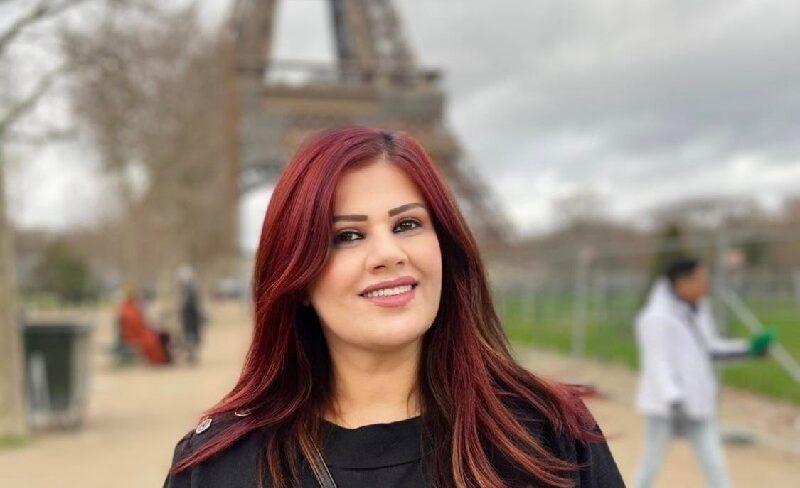
Bayan Ibrahim: The Paradise of March – Between Commemoration and Rights
2025-03-06
Every year, on a single day, the world is filled with congratulations for International Women’s Day, reaching a level where political parties, governmental, and non-governmental organizations all declare: “We must celebrate women for a day!” This, over time, has become a social norm, where official and unofficial celebrations take place on every level. Women have accepted this until they find themselves writing about it once again.
But what about the rest of the days? If women’s blood continues to be shed, if femicide statistics do not decline year after year, then what is the point?
Beyond this, the current situation in Iraq and the Kurdistan Region worsens daily—politically, economically, and legally. The country is filled with empty slogans and meaningless statements. By the hour, the judicial, legal, and social systems deteriorate further, while traditional customs and patriarchal governance take precedence over law and justice.
We all know that women, under such circumstances, are the first to lose their rights. The worsening political, economic, legal, and social conditions primarily harm women—both as individuals and as mothers. In the Kurdistan Region, we do have laws that claim to protect women’s rights. But do these laws truly hold more power than societal norms?
Moreover, institutions exist that are supposedly dedicated to women’s issues, from shelters to government agencies addressing domestic violence. But do women truly feel safe seeking refuge in these places?
If March 8 is not extended to 366 days of systemic change, ideological transformation, and a real commitment to equality—where men and women are seen as two equal human beings—then perhaps it is better that such celebrations do not exist at all.
Otherwise, we will remain trapped in an endless cycle of superficial slogans, where we voice support for women’s rights on just one day of the year, only for violence and oppression to continue behind closed doors. We will continue to watch our freedoms erode while the world showers us with flowers and hollow congratulations on Women’s Day.
Isn’t it deeply ironic? The more women are killed and their rights violated, the louder the congratulations become. Congratulations for what, exactly? For the rising number of femicides? For the increasing violence against women?
According to statistics, from the beginning of 2025 until February alone, nine women have been murdered in the Kurdistan Region.
It is essential that women take matters into their own hands—becoming decision-makers, taking leadership roles, and pursuing projects that move beyond symbolic recognition. Rather than just one day of remembrance, March 8 should be a day to assess violence statistics and work towards true rights and individual freedoms for women.
Bayan Ibrahim

Report: The Illusion of Celebration – Women’s Rights Beyond International Women’s Day
Prepared by: Bayan Ibrahim
Date: march 8 , 2025
Source: Bayan Ibrahim’s article
1. Introduction
Every year, March 8th is widely celebrated as International Women’s Day, with political leaders, organizations, and institutions expressing support for women’s rights. However, beyond the symbolic gestures, the reality for women, especially in Iraq and the Kurdistan Region, remains harsh. This report examines the disconnect between celebrations and real progress in women’s rights, highlighting the challenges women face in legal, social, and political spheres.
2. Symbolic Recognition vs. Real Change
• Superficial Celebrations: International Women’s Day has become a routine event where institutions issue statements, yet tangible improvements in women’s rights remain minimal.
• Systemic Challenges: Women continue to face high levels of violence, discrimination, and legal inequality, with little actual enforcement of protective laws.
• Social Norms vs. Legal Protections: While laws exist to safeguard women’s rights, traditional customs and patriarchal governance often overpower legal frameworks.
3. The Current Situation in Iraq and Kurdistan
• Rising Violence Against Women:
• In the first two months of 2025, nine women were murdered in the Kurdistan Region, reflecting an alarming trend of femicide.
• Domestic violence remains prevalent, with inadequate support systems for survivors.
• Weak Legal and Social Protections:
• Many women do not trust or seek help from government-run shelters due to societal stigma and institutional failures.
• Political instability and economic decline worsen the conditions for women, limiting their opportunities for independence and safety.
4. The Need for Systemic Change
• Extending Women’s Rights Beyond One Day:
• Women’s rights should not be confined to symbolic recognition on March 8th but must be an ongoing effort throughout the year.
• Addressing gender-based violence requires consistent policy enforcement and cultural shifts.
• Empowering Women as Decision-Makers:
• Women must take active roles in leadership, policymaking, and advocacy to drive real change.
• More resources should be allocated to programs that genuinely support women’s rights, rather than focusing on ceremonial acknowledgments.
5. Conclusion & Recommendations
Conclusion:
The celebration of International Women’s Day often masks the ongoing struggles women face daily. Without legal accountability, societal reform, and genuine political will, these celebrations remain an illusion rather than a reflection of real progress.
Recommendations:
1. Strengthen Legal Enforcement: Implement and enforce laws that protect women from violence and discrimination.
2. Increase Awareness & Education: Promote gender equality through education and public campaigns.
3. Improve Support Systems: Expand and enhance safe shelters, mental health services, and economic opportunities for women.
4. Encourage Women’s Leadership: Provide more opportunities for women in politics, law, and governance.
5. Monitor and Report Violence Data: Regularly publish and analyze statistics on gender-based violence to track progress and inform policies.
Final Thoughts
March 8 should not be a single-day celebration but a reminder of the work still needed. Only through continued advocacy, structural reforms, and active participation can women’s rights move beyond illusion to reality.
 U.S. Global Human Rights Organization, Kurdistan Region of Iraq Branch
Leave a comment